7 Early Signs Your Building May Need Waterproofing Before Damage Gets Worse
7 Early Signs Your Building May Need Waterproofing Before Damage Gets Worse
- Damp Spots on Floors, Walls, or Ceilings
- White Stains or Efflorescence on Concrete
- Hairline Cracks That Keep Spreading
- Mold Growth or Musty Odors
- Water Stains, Seepage Marks, or Rust Streaks
- Blistering, Peeling, or Delamination of Coatings
- Surface Deterioration, Spalling, or Soft Concrete
Overview
- Waterproofing problems often start small. Damp patches, hairline cracks, or light stains may show that moisture is already moving through floors, walls, joints, or concrete surfaces.
- For industrial and manufacturing facilities, this can affect floor integrity, safety, hygiene, equipment protection, and compliance. In the Philippines, heavy rainfall and humidity make early detection even more important.
- Recognizing these warning signs helps facility teams act before repair costs increase.
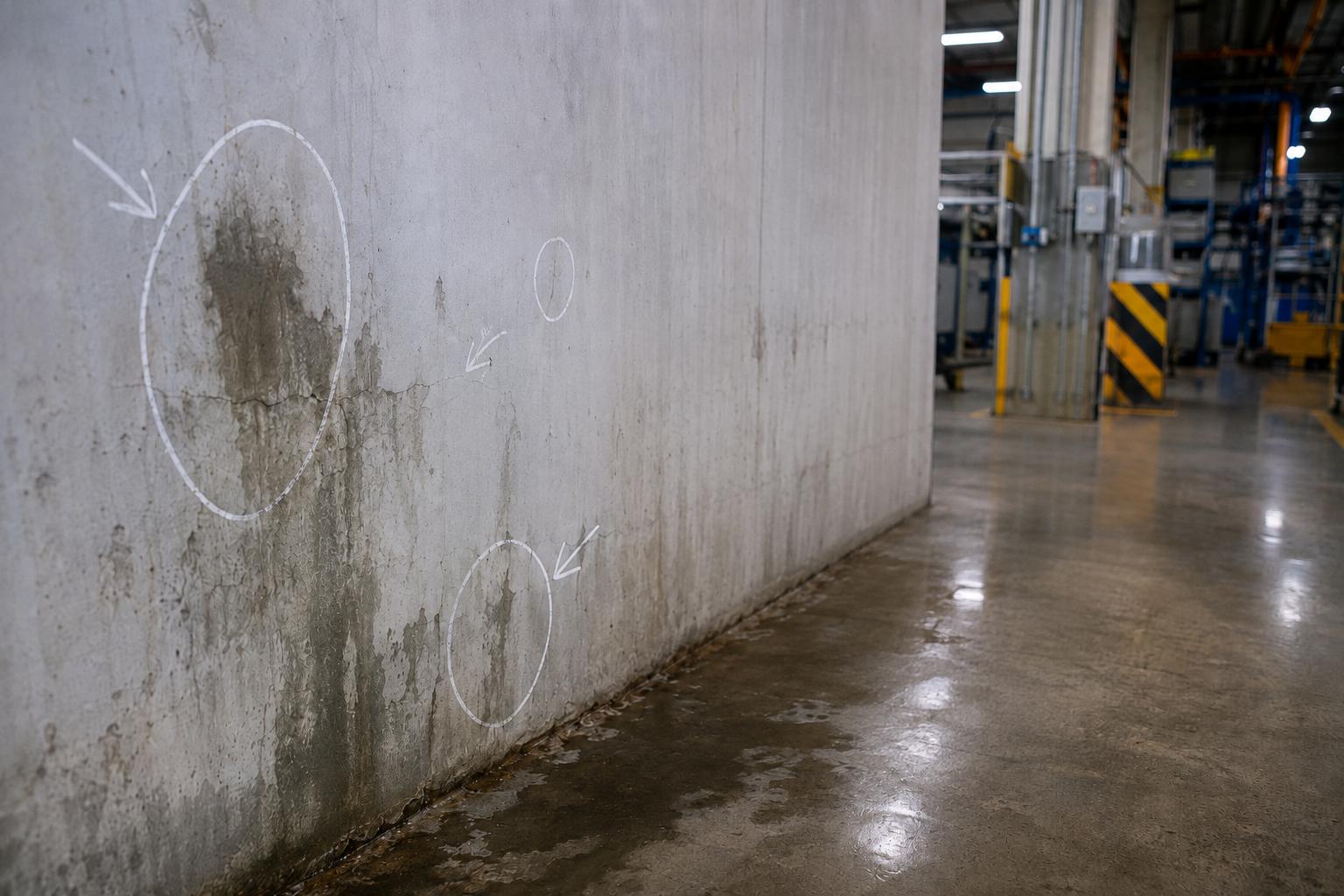
Water damage rarely starts as a major failure. In many buildings, the first signs appear as small stains, damp concrete, surface bubbling, mold growth, or cracks near drains, walls, joints, roof decks, basements, or production floors.
For compliance professionals, these warning signs should not be ignored. Moisture problems can create slip hazards, hygiene risks, indoor air quality concerns, and documentation issues during audits. EPA also emphasizes that mold control depends on moisture control and that leaks or wet materials should be addressed quickly to prevent mold growth.
For industrial and manufacturing teams, early waterproofing issues can also affect downtime. Once water reaches coatings, adhesives, embedded steel, concrete, or equipment zones, the repair may become more disruptive and expensive.
That is why identifying the early signs a building needs waterproofing before damage gets worse is an important part of facility maintenance.
Damp Spots on Floors, Walls, or Ceilings
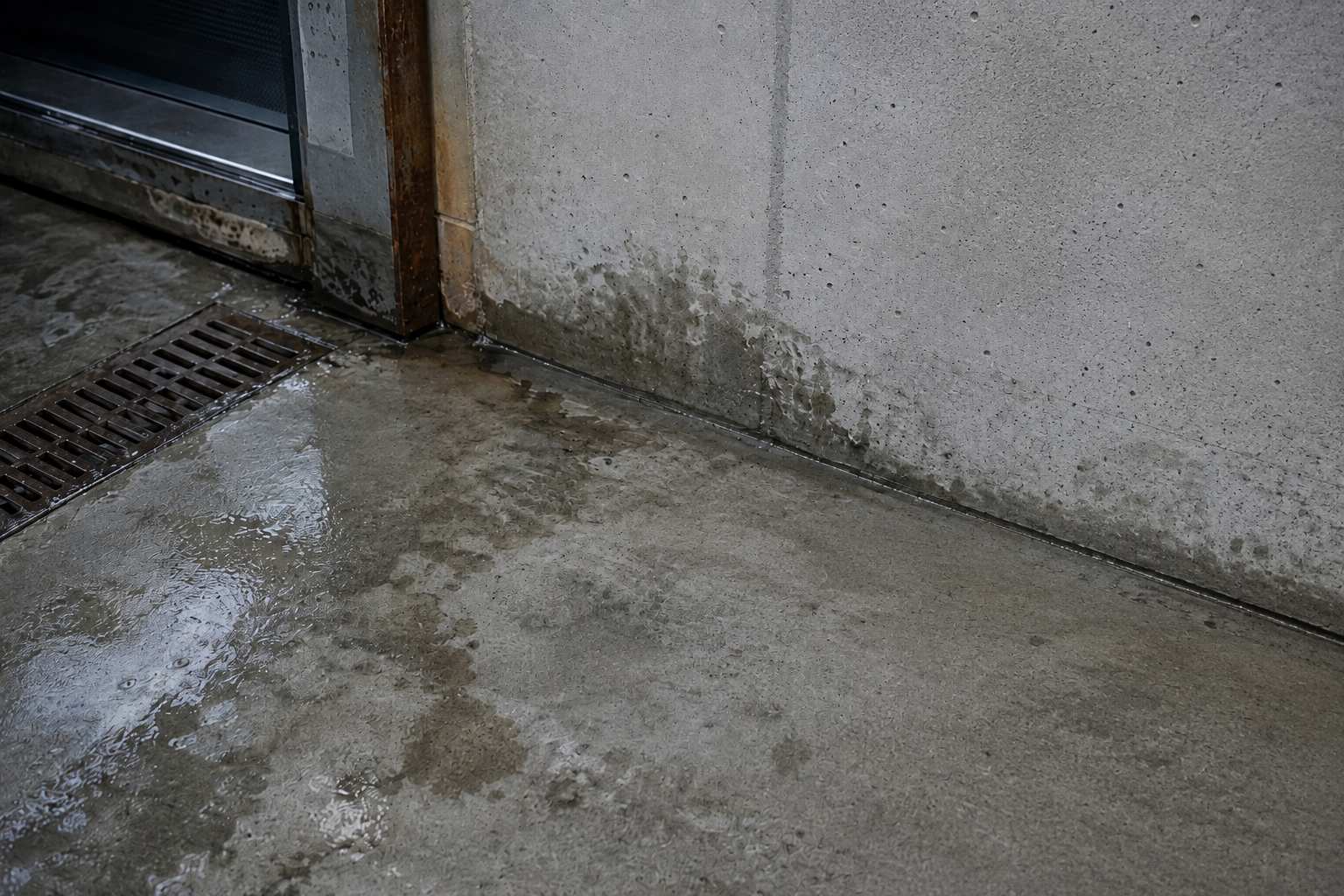
Damp spots are one of the clearest signs that moisture is entering or moving through the building. These may appear on concrete floors, basement walls, roof deck undersides, ceiling areas, columns, or wall-floor joints.
In industrial settings, damp areas often show up near drains, loading docks, washdown zones, equipment pads, cold storage rooms, or areas exposed to repeated wet-dry cycles. These zones should be monitored closely because they are often the first areas to reveal waterproofing failure.
A damp spot may indicate:
- water seepage through porous concrete
- failed or aging waterproofing membrane
- poor drainage
- condensation
- plumbing leakage
- moisture vapor from the slab
- cracks allowing water movement
If dampness keeps returning after cleaning or drying, the issue is likely not just surface moisture. It may require inspection, moisture testing, and waterproofing assessment.
White Stains or Efflorescence on Concrete
Efflorescence is a white, powdery, or chalk-like deposit on concrete, masonry, or wall surfaces. It happens when moisture moves through the material and carries soluble salts to the surface.
Although efflorescence may look like a cosmetic issue, it can be a warning sign of active moisture movement. In warehouses, basements, production areas, and exterior walls, this may mean water is entering through cracks, pores, joints, or unprotected surfaces.
For facility teams, efflorescence is important because it shows that moisture is traveling through the substrate. If ignored, the same moisture movement can affect coatings, adhesives, reinforcements, and nearby finishes.
Hairline Cracks That Keep Spreading
Small cracks may not always mean immediate structural danger, but they can become pathways for water infiltration. Once water enters a crack, it can widen the gap, weaken surrounding concrete, or carry contaminants deeper into the structure.
This is especially important in cold storage, food processing, chemical handling, and manufacturing environments. Temperature changes, cleaning cycles, chemical exposure, impact, and vibration can make cracks worse over time.
Static Cracks
Static cracks do not appear to be moving. They may still need sealing or repair before waterproofing is applied.
Active Cracks
Active cracks continue to move or widen. These often require flexible waterproofing systems, joint treatment, or crack-bridging solutions.
Cracks Near Joints and Drains
Cracks near drains, corners, wall-floor connections, expansion joints, and equipment bases need careful attention. These areas often experience higher moisture exposure and movement.
Documenting cracks early helps the project team choose the right repair method before applying any waterproofing system.
Mold Growth or Musty Odors
Mold growth is a strong sign that moisture is present for long periods. In hygienic facilities, food processing plants, healthcare areas, laboratories, and manufacturing spaces, this can become a compliance concern.
Mold may appear as dark spots, fuzzy growth, stains, or recurring discoloration on walls, floors, ceilings, corners, or behind stored materials. A musty odor can also suggest hidden moisture, even when the affected surface is not yet visible.
EPA states that mold will not grow without moisture, and that the way to control indoor mold growth is to control moisture. It also recommends fixing the water problem or leak to prevent mold growth from returning.
For compliance professionals, mold-friendly conditions should be treated as an early warning. The concern is not only the visible mold. The more important issue is the moisture source that allowed it to develop.
Water Stains, Seepage Marks, or Rust Streaks
Water stains often appear as brown, yellow, gray, or dark marks on walls, ceilings, slabs, or columns. In some cases, they may appear as streaks running down from cracks, joints, pipes, roof penetrations, or wall openings.
These stains can indicate recurring water movement. In commercial and industrial buildings, they may appear in:
- basements
- stairwells
- parking areas
- roof decks
- retaining walls
- equipment rooms
- production floors
- utility corridors
- storage areas
Rust streaks may also suggest water exposure near metal components, reinforcement, fixtures, or embedded elements. If corrosion begins, waterproofing and concrete repair may both be needed.
Blistering, Peeling, or Delamination of Coatings
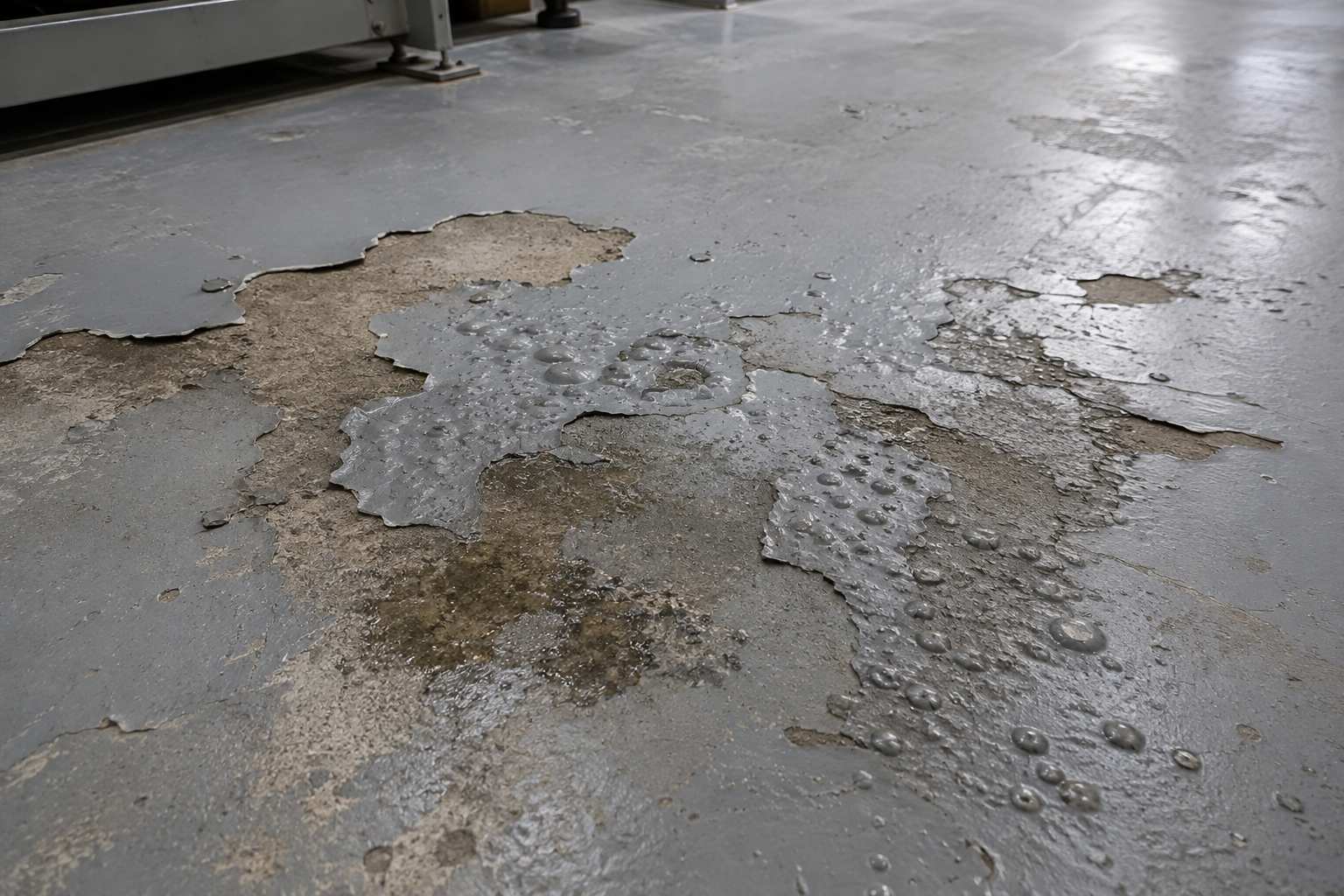
Blistering happens when bubbles or raised areas form under a coating, membrane, or floor finish. Peeling and delamination occur when the surface layer loses adhesion.
ASTM notes that moisture moving from concrete floor slabs can affect flooring systems and may cause failures such as debonding, coating deterioration, and microbial growth.
In industrial facilities, coating failure can create additional risks. Damaged surfaces may collect dirt, moisture, and contaminants. They may also become harder to clean, less slip-resistant, or less suitable for regulated areas.
When blistering or delamination appears, recoating the area without investigation is risky. The moisture source, substrate condition, and existing system compatibility should be checked first.
Surface Deterioration, Spalling, or Soft Concrete
Surface deterioration is a sign that the waterproofing issue may already be advancing. This can appear as rough concrete, powdering, scaling, spalling, soft areas, exposed aggregate, or damaged floor sections.
In manufacturing and industrial environments, surface deterioration may be accelerated by:
- standing water
- cleaning chemicals
- heavy equipment traffic
- forklift movement
- thermal shock
- repeated washdowns
- poor drainage
- moisture trapped below coatings
Once concrete begins to deteriorate, waterproofing may no longer be enough by itself. The area may need concrete repair, surface preparation, moisture testing, and a suitable waterproofing system.
Why Early Detection Matters for Industrial and Compliance Teams
Early waterproofing detection is not only a maintenance concern. It affects safety, compliance, operating costs, and business continuity.
For industrial and manufacturing facilities, water intrusion can damage floors, disrupt production, affect equipment, and create unsafe walking surfaces. For compliance teams, moisture can create mold risks, sanitation concerns, documentation gaps, and audit issues.
This means early warning signs should lead to inspection, not guesswork. The goal is to identify where moisture is coming from and how it is affecting the building before choosing a repair or waterproofing system.
What to Do When These Signs Appear
If any of these signs appear, the next step is not to immediately apply a coating. A proper inspection should come first.
Facility teams should:
- document the affected area
- take photos of stains, cracks, damp spots, or surface damage
- note when the issue appears or worsens
- check nearby drains, pipes, joints, slopes, and roof penetrations
- identify whether the issue returns after cleaning or drying
- request moisture testing or technical assessment
- avoid covering the problem before the source is found
Flooring Solutions’ service process includes site inspection, product specification, surface preparation, application, repairs and maintenance, and after-sales support. This type of process matters because waterproofing performance depends on both the product and the condition of the surface receiving it.
Choosing the Right Waterproofing Response
Different warning signs may require different waterproofing responses. For example, a roof deck with ponding water may need slope correction and a UV-resistant membrane. A basement wall with hydrostatic pressure may need a different strategy. A food processing floor with mold risk may need moisture control, surface preparation, and a hygienic flooring or coating system.
The right response depends on:
- moisture source
- substrate condition
- project area
- traffic exposure
- chemical exposure
- hygiene requirements
- structural movement
- existing coating or membrane condition
This is why early inspection is important. It helps prevent a small visible symptom from becoming a larger waterproofing failure.
Why Early Action Matters
Early waterproofing signs should not be treated as minor cosmetic problems. Damp spots, leaks, stains, cracks, mold growth, blistering, and surface deterioration can indicate deeper moisture movement within the building.
For industrial, manufacturing, and compliance-sensitive facilities, early action helps reduce repair costs, protect operations, support safety, and prevent damage from spreading. A timely inspection also helps determine whether the issue requires waterproofing, concrete repair, surface preparation, drainage improvement, or a full system replacement.
Key Takeaway
Early signs your building may need waterproofing include damp spots, efflorescence, cracks, mold, water stains, coating failure, and surface deterioration. Inspecting these signs early helps prevent larger structural, operational, or compliance issues.
Noticing damp spots, cracks, stains, mold, or surface deterioration in your facility? Work with Flooring Solutions Philippines for waterproofing assessment, site inspection, product specification, surface preparation, application, and repair support. Contact the team to identify the right waterproofing solution before the damage becomes more expensive.