How Facility Teams Can Track Polyurethane Flooring Performance Over Time
Overview
- This article explores the methods and strategies used to track PU flooring performance.
- Polyurethane (PU) flooring is a durable and high-performance solution for industrial, commercial, and healthcare facilities.
- To ensure safety, longevity, and optimal performance, facility teams implement a combination of routine maintenance, physical testing, and smart monitoring technologies.
Polyurethane (PU) flooring is a durable, chemical- and impact-resistant solution commonly used in industrial, commercial, and healthcare facilities for its longevity and ability to endure heavy traffic and harsh conditions. Understanding how facility teams track polyurethane flooring performance is essential to maintain safety, durability, and optimal functionality over time.
Flooring Solutions PU, a leading provider in the Philippines, ensures enhanced resistance against environmental stresses while supporting facilities in monitoring and preserving floor integrity.
In this article, we will explore how facility teams track polyurethane flooring performance, highlighting the technologies and strategies that help keep floors in peak condition.
Routine Maintenance and Visual Inspections
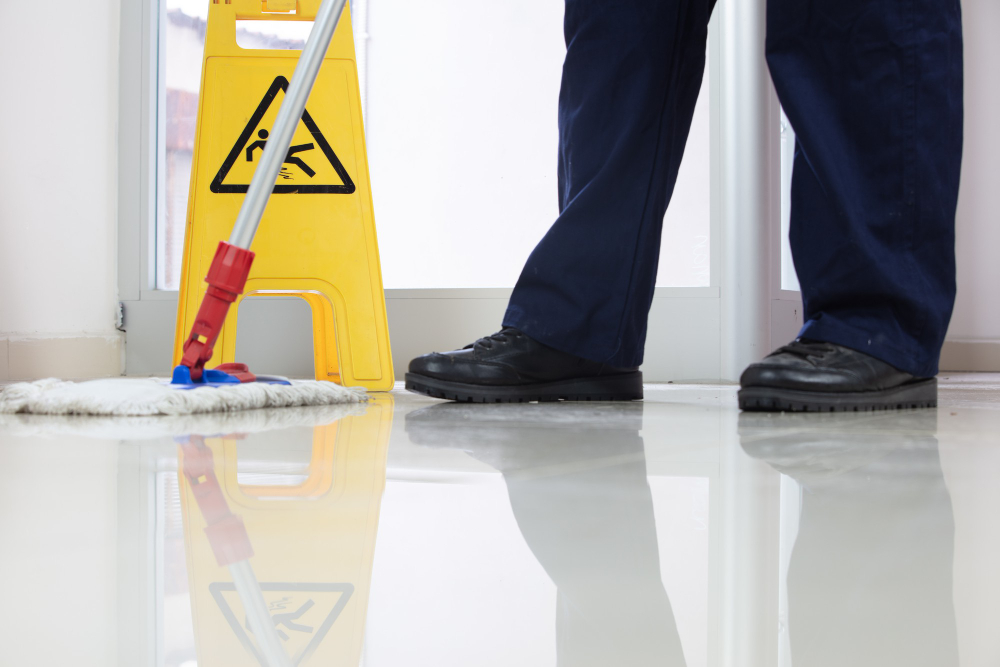
Routine maintenance and inspections are essential for preserving polyurethane flooring, ensuring long-term performance and durability in commercial and industrial facilities.
Regular Cleaning Schedules
Facility teams implement structured cleaning schedules, often daily or weekly depending on traffic and usage, to prevent dirt, debris, and chemical buildup that can degrade polyurethane coatings. Using appropriate non-abrasive cleaners and microfiber mops, staff can maintain the surface’s protective layer while minimizing scratches and wear.
These cleaning routines not only enhance appearance but also allow maintenance personnel to observe discoloration, peeling, or minor surface cracks.
Periodic Walk-throughs
Routine visual inspections or walk-throughs are conducted to assess the condition of polyurethane flooring in high-traffic areas. During these inspections, facility teams examine joints, corners, and transitions, noting any wear patterns, surface blisters, or pooling of water.
This proactive monitoring helps identify problem areas before they escalate into significant damage, ensuring timely interventions and maintaining overall floor performance.
Maintenance Logs
Keeping detailed maintenance logs allows facility managers to track the history of cleaning, inspections, and repairs for polyurethane floors. By documenting observed wear, remedial actions, and scheduled maintenance, teams can analyze trends over time, predict potential issues, and optimize cleaning or recoating schedules. These logs serve as a valuable tool for auditing flooring performance and ensuring consistent upkeep across large facilities.
Protective Measures
To further safeguard polyurethane surfaces, facilities implement protective measures such as placing mats in entrances, using furniture pads, and controlling chemical exposure in industrial environments.
These precautions reduce stress on the flooring, prevent abrasion, and maintain its waterproof and anti-slip properties. Combined with routine maintenance and visual inspections, these measures help extend the service life and functionality of polyurethane flooring.
Scheduled Physical Testing
Regular evaluation of polyurethane flooring is essential to ensure its durability, safety, and performance over time. Here are the scheduled physical testing methods that facility teams use to track the condition of polyurethane flooring and maintain its protective qualities.
Slip Resistance Testing
Facility teams perform slip resistance testing to ensure floors remain safe under wet or high-traffic conditions. Using devices like a tribometer, they measure the coefficient of friction across different areas of the flooring.
Results indicate whether the surface meets safety standards or requires corrective measures, helping prevent slips and falls in environments such as hospitals, kitchens, or industrial facilities.
Impact Resistance Testing
Impact resistance testing evaluates how well polyurethane flooring withstands sudden force or dropped objects. Teams typically use standardized weights dropped from specific heights onto the surface, inspecting for dents, cracks, or surface deformation. This testing is particularly important in warehouses, manufacturing plants, and commercial spaces where heavy equipment or materials are regularly handled.
Abrasion Resistance
Abrasion resistance testing measures how polyurethane floors endure wear and tear from daily traffic, machinery, and equipment movement. Using specialized abrasion testing machines, teams simulate long-term usage by rubbing abrasive materials against the surface. The degree of wear helps facility managers determine if resurfacing or protective treatments are needed to maintain floor integrity.
Adhesion Testing
Adhesion testing ensures the polyurethane coating remains firmly bonded to the substrate. Facility teams use methods such as pull-off tests or tape tests to assess the strength of the bond and detect areas of potential delamination. Maintaining strong adhesion is critical for preventing peeling, moisture intrusion, and premature flooring failure in high-use environments.
Data-Driven & Smart Flooring Technologies
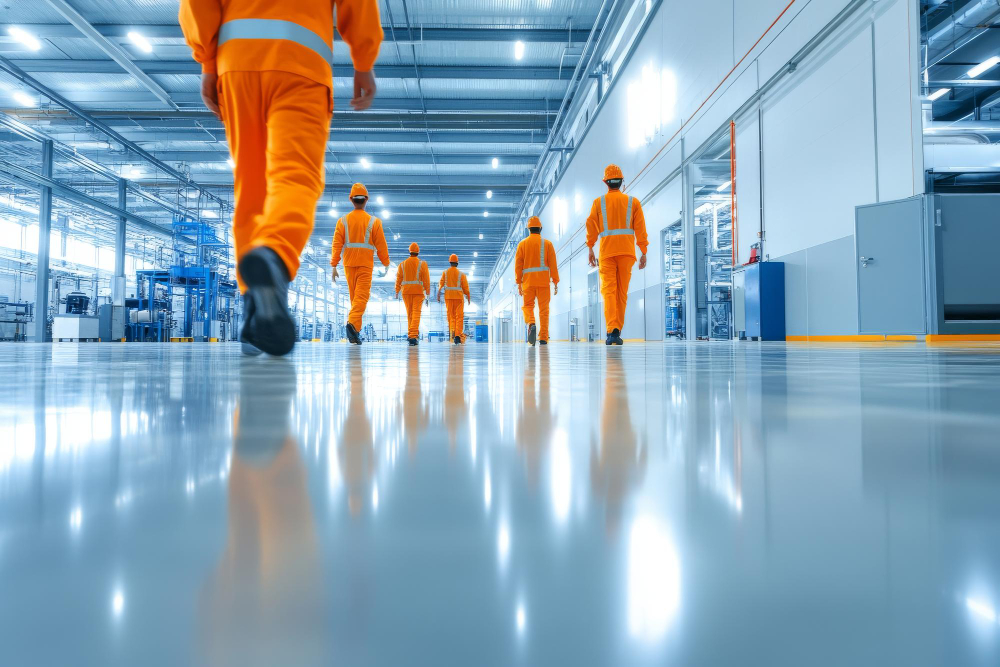
Here are the ways modern data-driven and smart flooring technologies help facility teams monitor performance, durability, and maintenance needs in real time.
Impact and Motion Sensors
Impact and motion sensors embedded in polyurethane flooring allow facility teams to track foot traffic patterns, heavy equipment movement, and sudden impacts that may affect floor integrity. These sensors measure pressure, vibrations, and movement in real time, alerting managers to areas experiencing excessive stress or repeated impact.
By analyzing this data, teams can identify high-risk zones, schedule preventative maintenance, and adjust operational practices to reduce wear, ensuring the flooring maintains optimal performance and safety over time.
Wear-and-Tear Analytics
Wear-and-tear analytics utilize sensors and software to monitor polyurethane flooring for signs of degradation, abrasion, or chemical damage. Facility teams collect and analyze data on coating thickness, surface friction, and localized stress points, allowing them to predict potential failures before they occur.
This proactive approach enables timely interventions, such as recoating or spot repairs, helping organizations maintain durability, compliance with safety standards, and cost-efficient long-term flooring performance.
Key Takeaway
Understanding how facility teams track polyurethane flooring performance is key to maintaining durability, safety, and operational efficiency.
Ensure your facility’s flooring performs at its highest potential with Flooring Solutions, the top provider of PU flooring in the Philippines. Contact our expert team today to explore our wide selection of resin systems and smart flooring technologies, and discover how we can help your facility achieve long-lasting, high-performance flooring.