How Heavy Machinery and Foot Traffic Accelerate Floor Degradation
Overview
- Heavy machinery and foot traffic accelerate floor degradation through abrasive wear, point loads, impacts, and vibrations, compounded by moisture and chemicals.
- These stresses shorten floor lifespan, create safety hazards, and increase maintenance costs.
- Flooring Solutions provides durable epoxy and polyurethane systems to protect high-traffic industrial and commercial floors, extending longevity and safety.
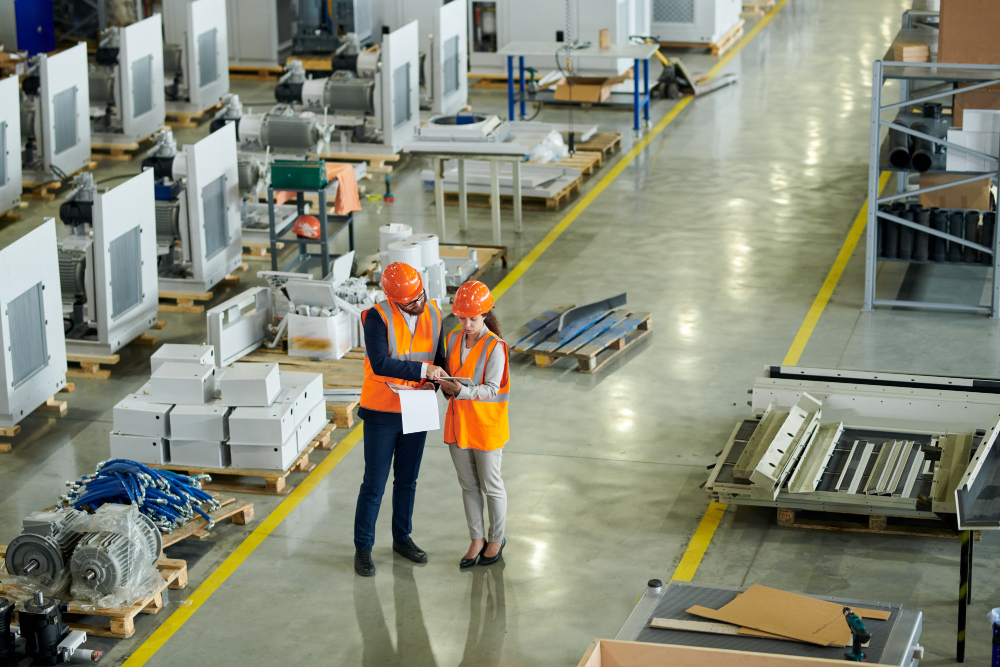
Maintaining a safe facility starts with durable floors. Heavy machinery and foot traffic accelerate floor degradation, creating constant stress that shortens even the most resilient surfaces, making early recognition and protection essential for structural integrity and operational efficiency.
Understanding their impact allows facility managers to take proactive measures, such as installing advanced solutions like polyurethane flooring, designed to withstand the demands of high-traffic industrial and commercial environments.
How Heavy Machinery Damages Floors

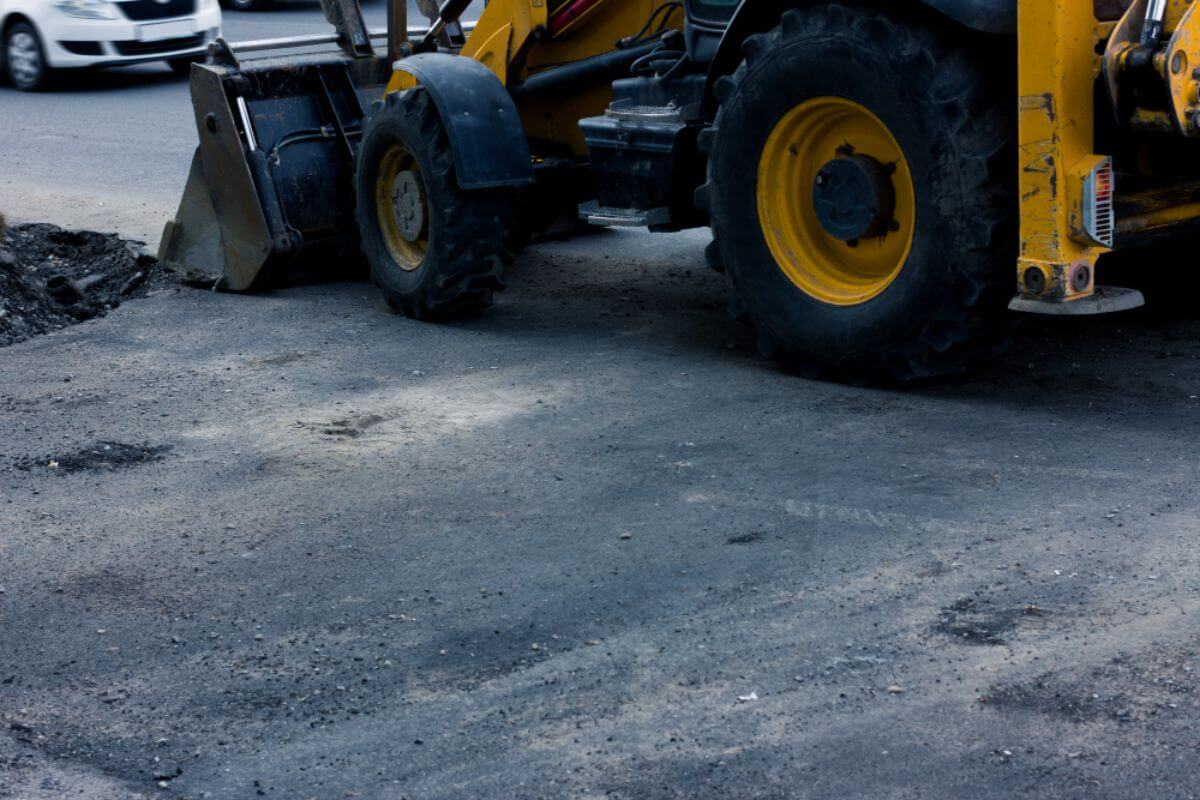
Heavy machinery represents the most significant mechanical challenge a floor will face. Industrial equipment, such as forklifts, transport dollies, and scissor lifts, does not simply sit on the floor; it interacts with it through intense physical forces that can lead to rapid deterioration.
Abrasive Forces
When machinery moves, the friction between the tires or tracks and the floor surface creates abrasive wear.
This is particularly destructive during “scrubbing,” which occurs when a vehicle, especially one with dirt, debris, or particles, turns its wheels while stationary or makes sharp maneuvers.
This action grinds away the top layer of the floor, slowly eroding the finish and exposing the porous subfloor to further damage.
High Point Loads
Unlike human footsteps, which distribute weight across a larger area, heavy machinery often concentrates several tons of pressure onto the small contact patches of its wheels.
This is known as point loading. If the weight exceeds the compressive strength of the floor, it causes the material to compress or “crush.” Over time, this results in permanent indentations, rutting, and internal fractures that weaken the entire slab.
Impact Damage
This happens when heavy loads are dropped or when machinery strikes the floor with sudden force. Because most industrial floors are rigid, they lack the “flex” to absorb this energy.
This leads to spalling, the chipping or breaking of the floor surface, which creates uneven paths that can further damage vehicle tires and pose safety risks to operators.
Vibration
Dynamic loads from stationary or moving machinery transmit continuous vibrations through the floor. These high-frequency pulses can cause “fatigue” within the flooring material.
Continuous vibration slowly loosens the bond between the floor coating and the concrete base, leading to delamination or the formation of spiderweb-like cracks around the base of the equipment.
How Foot Traffic Contributes to Floor Wear
While a single person’s weight is negligible compared to a forklift, the cumulative effect of thousands of footsteps is a powerful abrasive force that works quietly to undermine floor quality.
Abrasion and Wear
Foot traffic introduces external contaminants like sand, grit, and metal shavings into the facility. As people walk, their soles act like high-grit sandpaper, grinding these particles into the floor. This micro-abrasion slowly strips away the floor’s luster, turning a polished, professional surface into a dull, worn path.
Removal of Protective Coatings
The constant friction of foot traffic eventually wears through wax, sealants, and thin-film coatings. Once these protective layers are gone, the raw substrate, be it concrete, stone, or wood, is left defenseless.
Without a coating, the floor becomes more susceptible to staining and chemical absorption, which can lead to deep-seated structural issues that are far more expensive to repair than a simple surface coat.
Microcracks
Foot traffic, especially in environments where staff wear hard-soled safety boots, can create microscopic fissures in the surface. While these microcracks are often invisible to the naked eye, they act as entry points for moisture.
As people walk over these areas, the pressure of their weight can actually “pump” liquids and cleaning chemicals deeper into the crack, expanding it over time until it becomes a visible fracture.
Compounding Factors That Accelerate Degradation

Floor failure rarely happens due to one force alone. Rather, it is the combination of mechanical stress and environmental factors that leads to a “snowball effect” of damage.
Moisture and Chemical Ingress
When machinery or traffic creates even the smallest crack, the floor’s “envelope” is broken.
Moisture from cleaning or humidity, as well as oils and chemicals from machinery, seep into these openings.
This can cause the concrete underneath to swell or the rebar to corrode, leading to “heaving” where the floor begins to lift and buckle.
Safety Hazards
Degraded floors are a primary cause of workplace accidents. Potholes, cracks, and uneven surfaces created by heavy use become tripping hazards for pedestrians and stability risks for machinery.
A forklift carrying a tall pallet can become dangerously unstable if one wheel dips into a floor fracture, potentially leading to tipped loads or injury.
Dust Generation
As the surface of a concrete floor breaks down under traffic, it produces fine alkaline dust.
This process, known as “dusting,” can compromise indoor air quality and damage sensitive electronic equipment or contaminate products in a manufacturing line.
Maintaining a dust-free environment is nearly impossible once the floor’s surface integrity has been compromised.
Why Combined Traffic Is Especially Destructive
When heavy machinery and foot traffic coincide in the same area, floors experience both concentrated and distributed stresses. Key consequences include:
- Accelerated coating wear and removal
- Formation of deeper cracks and structural damage
- Faster onset of moisture and chemical infiltration
- Increased maintenance and replacement costs
Slow Down Floor Degradation with Flooring Solutions
At Flooring Solutions, we provide high-performance flooring designed to withstand daily operational stress. Our epoxy systems resist abrasion and prevent substrate damage from foot traffic, while polyurethane floors absorb heavy machinery impacts and vibrations. Expert installation ensures durable, safe, and long-lasting facility surfaces.
Key Takeaway
Understanding how heavy machinery and foot traffic accelerate floor degradation turns maintenance into strategic management. Floors are critical for safety and efficiency. Addressing wear early and using durable solutions extends lifespan and prevents downtime. Contact Flooring Solutions to design resilient, long-lasting flooring systems.