8 Waterproofing Problems Philippine Buildings Face During Rainy Season
8 Waterproofing Problems Philippine Buildings Face During Rainy Season
- Roof Deck Leaks During Heavy Rain
- Poor Drainage Around the Building
- Basement Seepage and Below-Grade Moisture
- Damp Concrete Walls and Efflorescence
- Waterproofing Damage From Building Movement
- Failed Joint Sealants in Wet Conditions
- Condensation From High Humidity
- Roof Coating Deterioration From UV, Heat, and Rain
Overview
- Rainy season can expose weak points in commercial, industrial, institutional, and public infrastructure buildings. Areas that seemed dry during summer may begin showing leaks, stains, damp patches, mold growth, or coating damage once heavy rainfall and high humidity return.
- These problems are not always caused by one large defect. In many cases, water enters through small cracks, unsealed penetrations, weak joints, poor drainage, or aging roof coatings.
- For Philippine buildings, waterproofing should be treated as a preventive system. Proper inspection, material selection, surface preparation, and maintenance help reduce the risk of recurring leaks and costly structural damage.
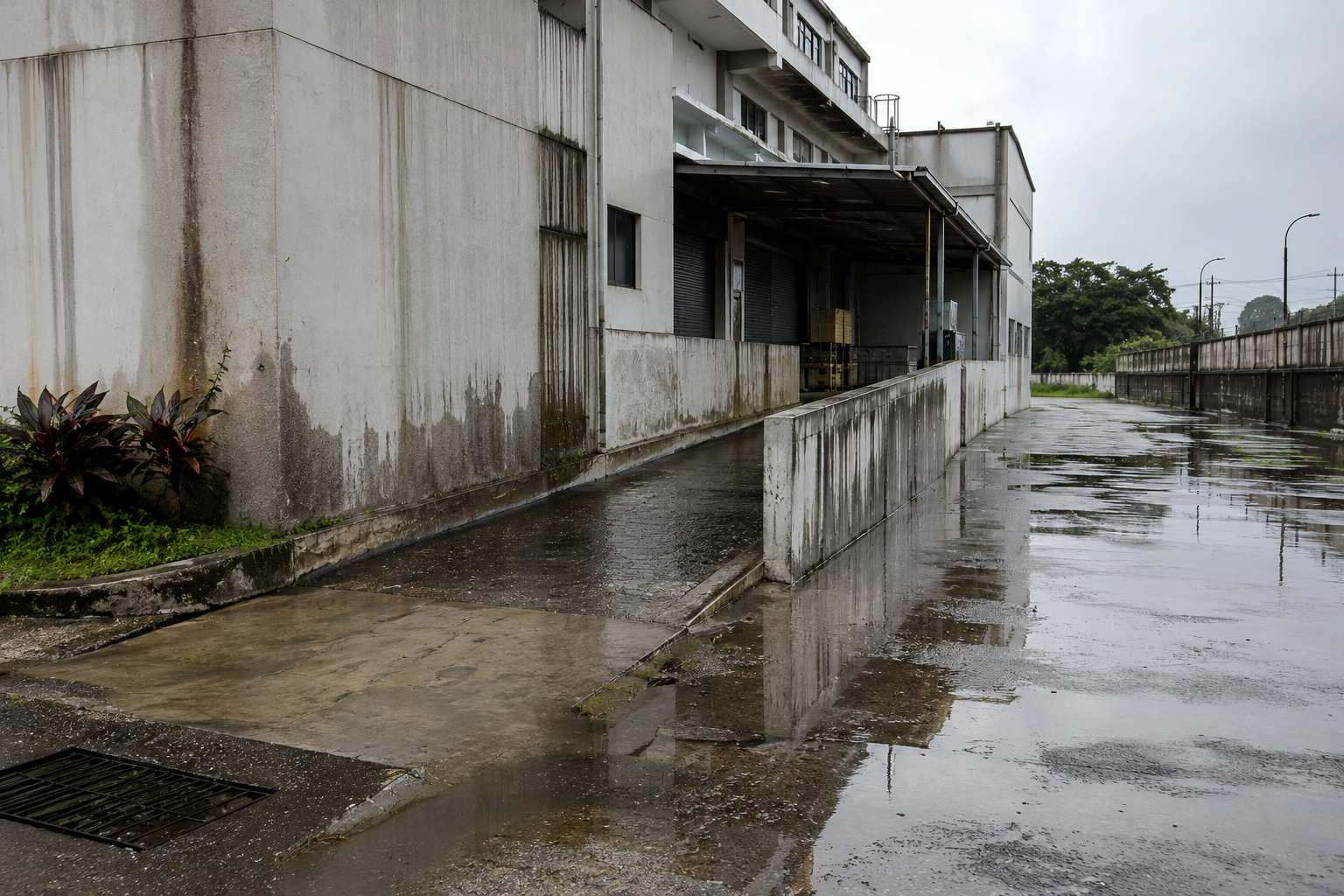
Commercial and industrial buildings in the Philippines face harsh moisture conditions during the rainy season. Heavy rain can overwhelm drains. High humidity can create condensation. Roof decks may develop ponding water. Basements and below-grade areas may experience seepage. Concrete walls may show dampness, stains, or efflorescence.
For institutional buildings and public infrastructure, these issues can affect more than appearance. Water intrusion may disrupt operations, weaken concrete, damage equipment, create slip hazards, and increase maintenance costs.
Understanding the waterproofing problems Philippine buildings commonly face during the rainy season helps facility teams identify risks earlier and choose the right response before the damage spreads.
Roof Deck Leaks During Heavy Rain
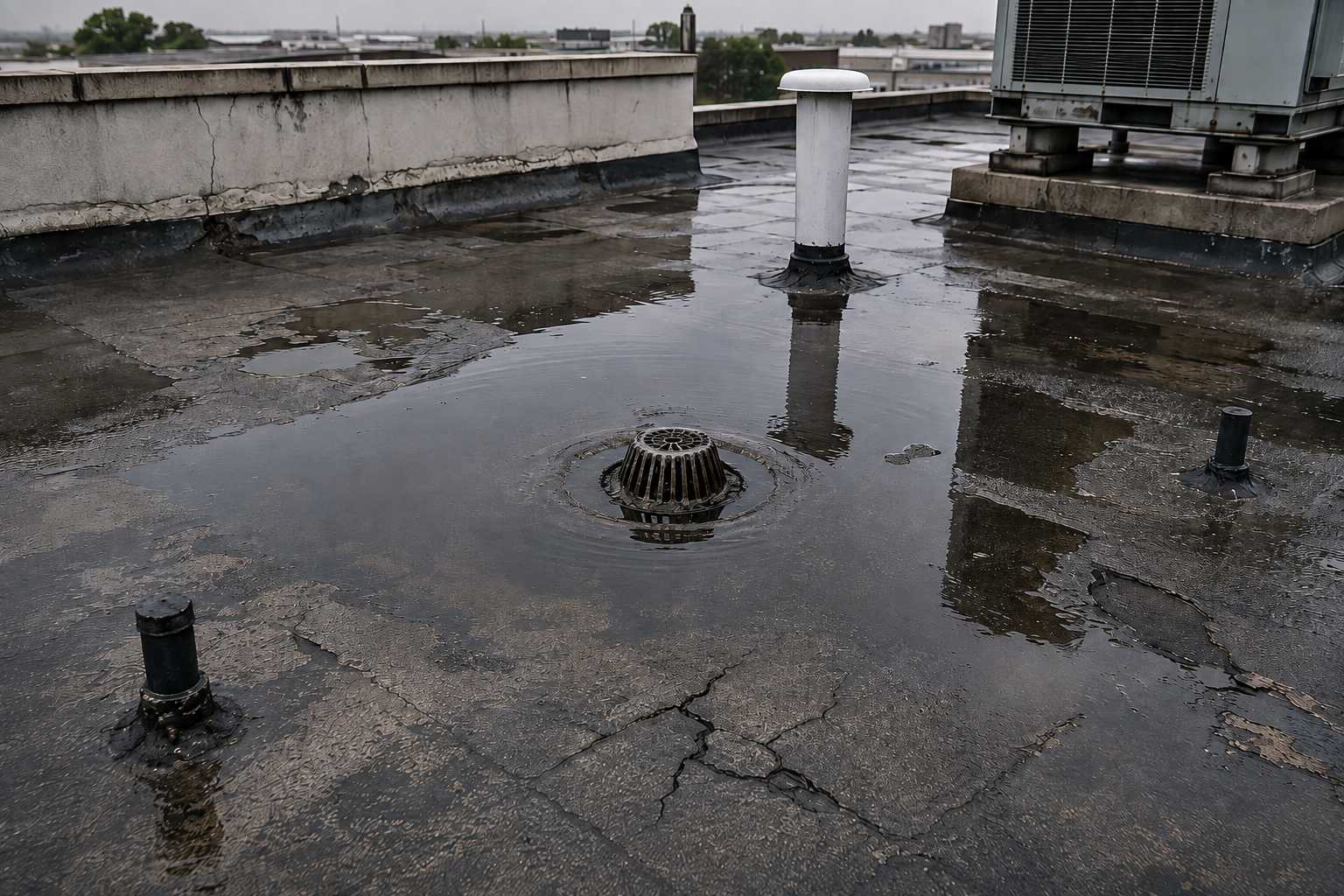
Roof decks are one of the most exposed parts of a building. During rainy season, water can collect around cracks, drains, penetrations, equipment bases, and low-slope areas.
Leaks often begin when water ponds on the roof surface and finds a weak point in the waterproofing layer. This may happen around HVAC supports, pipe penetrations, roof drains, construction joints, parapet walls, or small cracks in the slab.
A roof deck may need inspection if there are ceiling stains, damp areas below the slab, peeling paint, or recurring leaks after heavy rain. In many cases, the issue is not only the membrane. The drainage slope, surface condition, and detailing around penetrations must also be checked.
Poor Drainage Around the Building
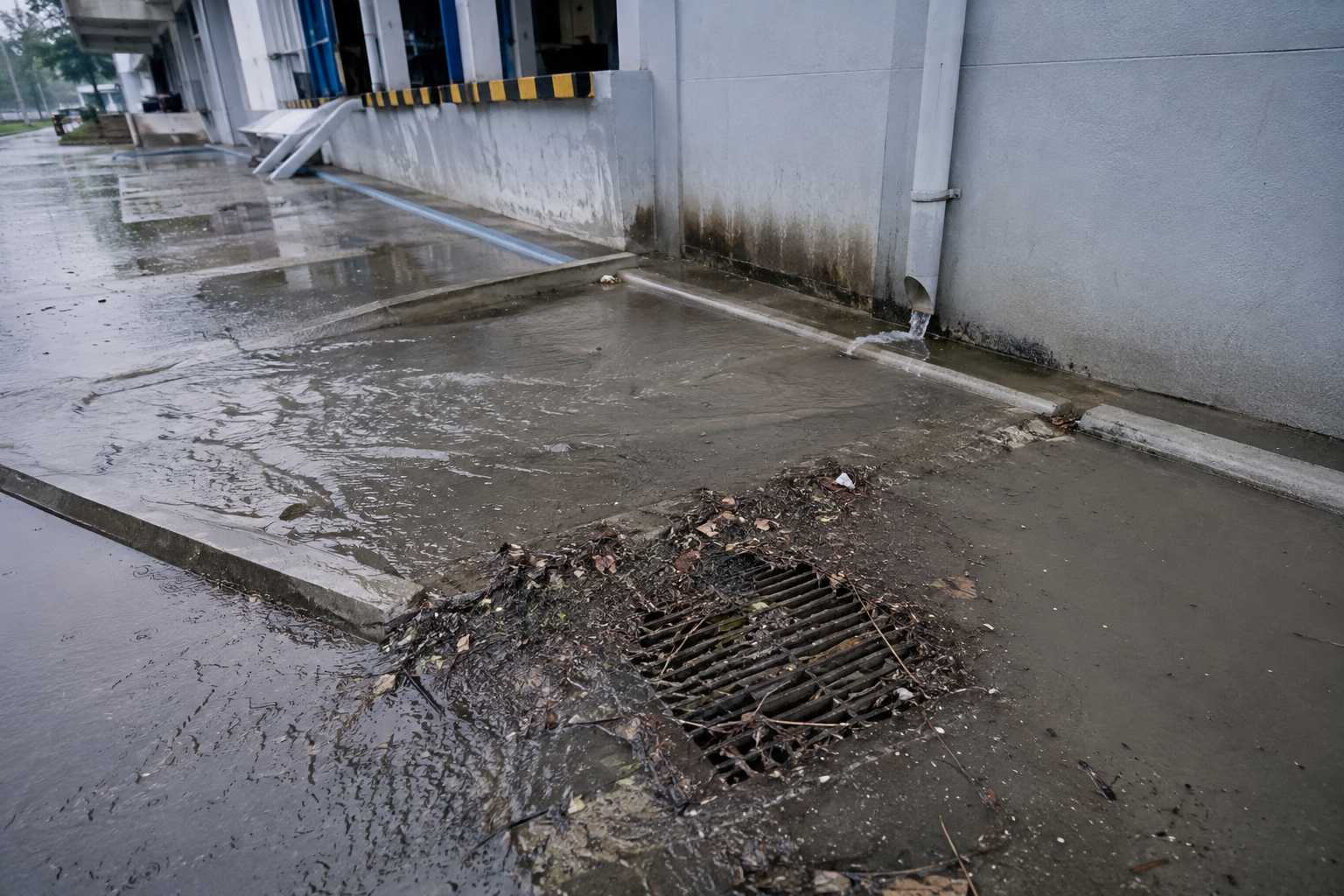
Poor drainage is a major rainy season problem for Philippine buildings. When water cannot move away from the structure, it may collect around foundations, walls, basements, loading areas, parking structures, and exterior slabs.
Clogged drains, undersized drainage systems, poor grading, and blocked gutters can all force water toward the building instead of away from it. Over time, this can increase pressure on below-grade walls and waterproofing systems.
Facility teams should monitor areas where water repeatedly collects after rain. These include basement entrances, loading docks, ramps, roof drains, perimeter walls, and drainage channels.
Good drainage planning should work together with the right waterproofing solutions in the Philippines to protect high-risk building areas.
Basement Seepage and Below-Grade Moisture
Basement seepage happens when water enters through below-grade walls, slabs, joints, cracks, or penetrations. During prolonged rain, saturated soil and high groundwater levels can place pressure on basement structures.
This is a serious issue for industrial, institutional, and infrastructure facilities because basements may contain equipment rooms, storage areas, utility spaces, parking areas, or controlled environments.
Warning signs include:
- damp basement walls
- water stains near wall-floor joints
- recurring puddles
- peeling coatings
- musty odors
- white deposits on concrete
- cracks with visible moisture
Basement seepage should not be covered with a new coating without inspection. The moisture source must be identified first, especially if groundwater pressure, drainage failure, or damaged membranes are involved.
Damp Concrete Walls and Efflorescence
Concrete walls can absorb and transfer moisture during rainy season. When water moves through concrete or masonry, it may carry salts to the surface. These salts can appear as white, powdery deposits known as efflorescence.
Damp walls and efflorescence may seem cosmetic, but they can indicate active moisture movement. In commercial and institutional buildings, they often appear in basements, stairwells, retaining walls, exterior walls, utility areas, and parking structures.
If left unresolved, moisture movement can affect coatings, adhesives, finishes, and nearby materials. It may also create conditions for mold growth in poorly ventilated areas.
When dampness, stains, or surface deterioration begin to appear, these early waterproofing signs should be checked before repairs are chosen.
Waterproofing Damage From Building Movement
Buildings naturally move. Thermal expansion, vibration, settlement, traffic loads, and minor structural movement can all affect waterproofing performance.
During rainy season, movement-related cracks become more problematic because water can enter through gaps that were previously dry. Rigid waterproofing systems may crack if they cannot accommodate movement in the substrate.
This issue commonly appears around:
- expansion joints
- construction joints
- wall-floor joints
- roof deck cracks
- slab transitions
- column bases
- equipment supports
- bridge decks or public infrastructure surfaces
For areas with movement, system flexibility and joint detailing are important. The waterproofing system must be able to handle the way the structure performs in real conditions.
Failed Joint Sealants in Wet Conditions
Joint sealants protect gaps, transitions, and movement areas from water entry. During rainy season, they are exposed to wet-dry cycles, surface movement, ponding water, and humidity.
Sealant failure may appear as cracking, separation, hardening, peeling, or gaps along the joint edge. Once the sealant loses adhesion, water can enter beneath the waterproofing layer or into the structure.
Common Sealant Failure Areas
Joint sealants often fail around wall-floor joints, roof penetrations, expansion joints, pipe sleeves, window perimeters, drains, and concrete transitions.
Why Surface Preparation Matters
Even a good sealant can fail if the joint is dirty, wet, weak, or poorly prepared. Dust, old sealant residue, oil, and improper joint depth can all reduce performance.
What Facility Teams Should Check
Teams should inspect joints after heavy rain, especially in roof decks, basements, washdown areas, parking structures, and exterior walls. Open joints should be repaired before water intrusion spreads.
A proper site inspection helps confirm joint condition, water entry points, surface defects, and the right repair method.
Condensation From High Humidity
Not all moisture problems come from direct leaks. In the Philippines, high humidity can also cause condensation when warm, moist air meets cooler surfaces.
This is common in cold storage facilities, air-conditioned areas, production rooms, basements, ceilings, walls, and spaces with poor ventilation. Condensation may look like sweating walls, damp ceilings, wet floors, or recurring moisture near cold surfaces.
For industrial and institutional facilities, condensation can create concerns such as mold growth, slippery floors, coating failure, corrosion, and hygiene issues.
Waterproofing may need to work with vapor control, insulation, ventilation, and proper system selection. Treating condensation as a simple surface leak may lead to the wrong repair.
Roof Coating Deterioration From UV, Heat, and Rain
Roof coatings face constant exposure to sunlight, heat, rain, and temperature changes. During rainy season, aging coatings may reveal cracks, peeling, blisters, or worn areas that allow water to enter.
In tropical conditions, roof surfaces can expand and contract repeatedly. If the coating is already brittle or thin, heavy rain can accelerate failure.
Signs of roof coating deterioration include:
- chalking
- cracks
- peeling
- blisters
- ponding water
- exposed substrate
- recurring leaks below the roof deck
- worn coating around drains and penetrations
A roof coating should be checked before the rainy season when possible. If damage is already visible, the roof deck may need cleaning, crack repair, surface preparation, and a compatible waterproofing system.
The right waterproofing system selection should consider exposure, structure type, drainage, durability needs, and long-term performance requirements.
How to Reduce Rainy Season Waterproofing Risks
Rainy season waterproofing problems are easier to manage when buildings are inspected before major damage appears.
Facility teams should:
- clear drains, gutters, and drainage channels
- check roof decks for cracks, ponding, and worn coatings
- inspect basements and retaining walls for dampness
- document recurring leaks and stains
- check joint sealants and expansion joints
- monitor condensation-prone areas
- repair cracks before water enters deeper
- choose waterproofing materials in the Philippines based on actual exposure
- schedule technical assessment for high-risk areas
In areas where water has already damaged the slab or wall surface, concrete repair may be needed before a new waterproofing system is applied.
Preventing Rainy Season Damage Starts With the Right Assessment
Waterproofing problems during rainy season should not be treated as isolated leaks. Roof deck leaks, basement seepage, damp walls, failed sealants, condensation, and coating damage often point to deeper issues involving drainage, movement, surface condition, or material compatibility.
For industrial, institutional, and public infrastructure buildings, a proper assessment helps identify where water is coming from and how the structure is being affected. This reduces guesswork and helps the project team choose a waterproofing system that fits the actual site conditions.
Key Takeaway
The waterproofing problems Philippine buildings commonly face during rainy season include roof deck leaks, drainage issues, basement seepage, damp walls, building movement, failed sealants, condensation, and roof coating deterioration. Early inspection and proper system selection help prevent these issues from turning into costly structural, operational, or maintenance problems.
Preparing your facility for the rainy season? Work with Flooring Solutions Philippines for site inspection, product specification, surface preparation, waterproofing application, repairs, and maintenance support. Contact the team to identify the right waterproofing system for your building conditions.