What Maintenance Practices Keep Epoxy Floors in Top Condition for Years?
Overview
- Though durable, industrial and commercial epoxy floors require consistent care to ensure long-term performance.
- Essential maintenance practices keep epoxy floors in top condition by removing abrasive debris, avoiding soapy residues, and managing automotive leaks.
- Preventing physical damage from heavy equipment and harsh chemicals preserves the system’s high-performance finish with minimal upkeep.
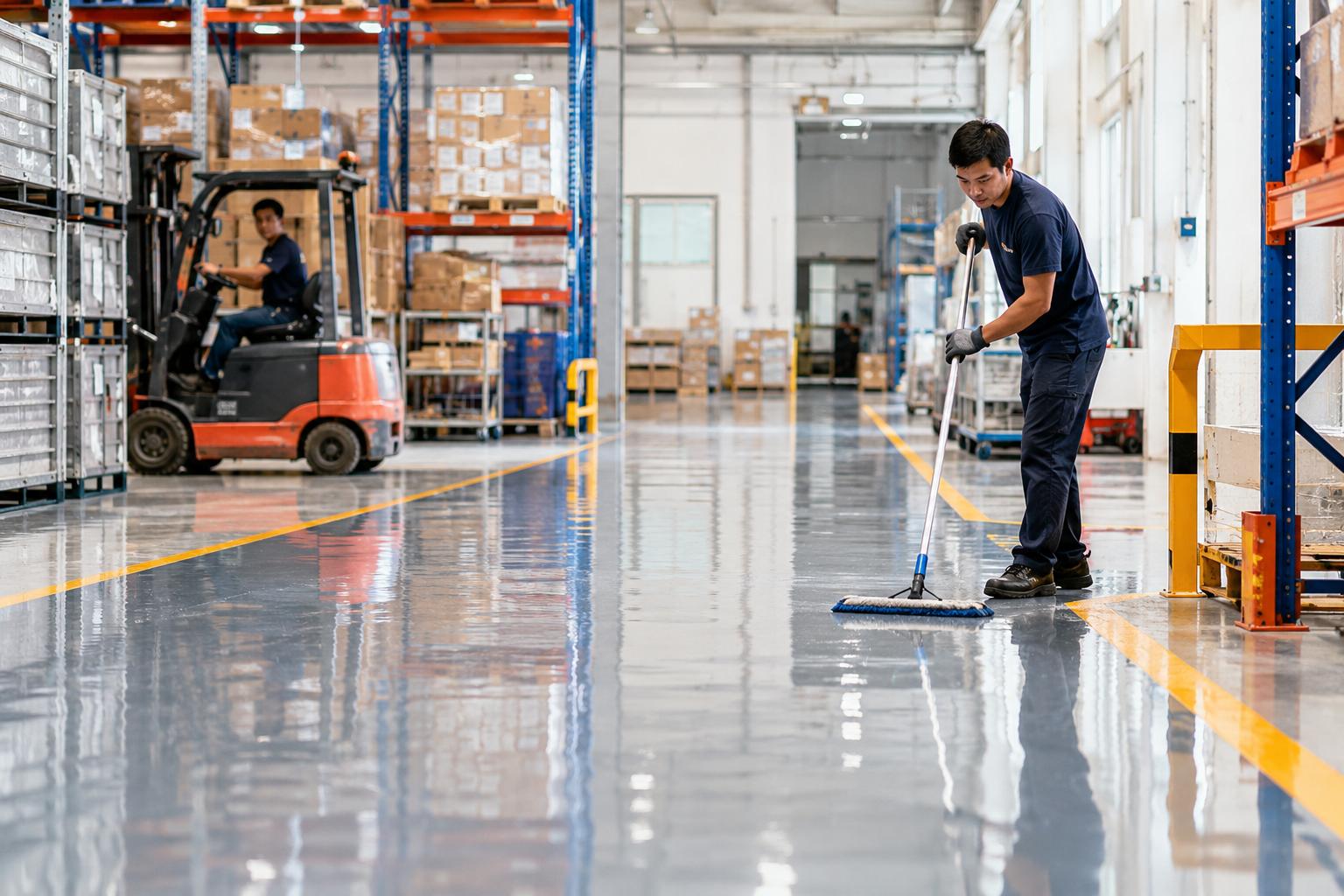
Whether in industrial, commercial, or manufacturing environments, epoxy flooring is widely used because of its chemical resistance and ability to withstand continuous operational stress. From warehouses and production facilities to parking structures and processing plants, these systems are designed to operate under high-demand conditions daily.
However, even the most durable flooring still requires consistent care to maintain its long-term integrity and surface performance. Often overlooked, these maintenance practices are what keep epoxy floors in top condition over the long run. They help preserve durability, prevent premature wear, and ensure reliable performance throughout their service life and beyond.
Daily and Weekly Cleaning
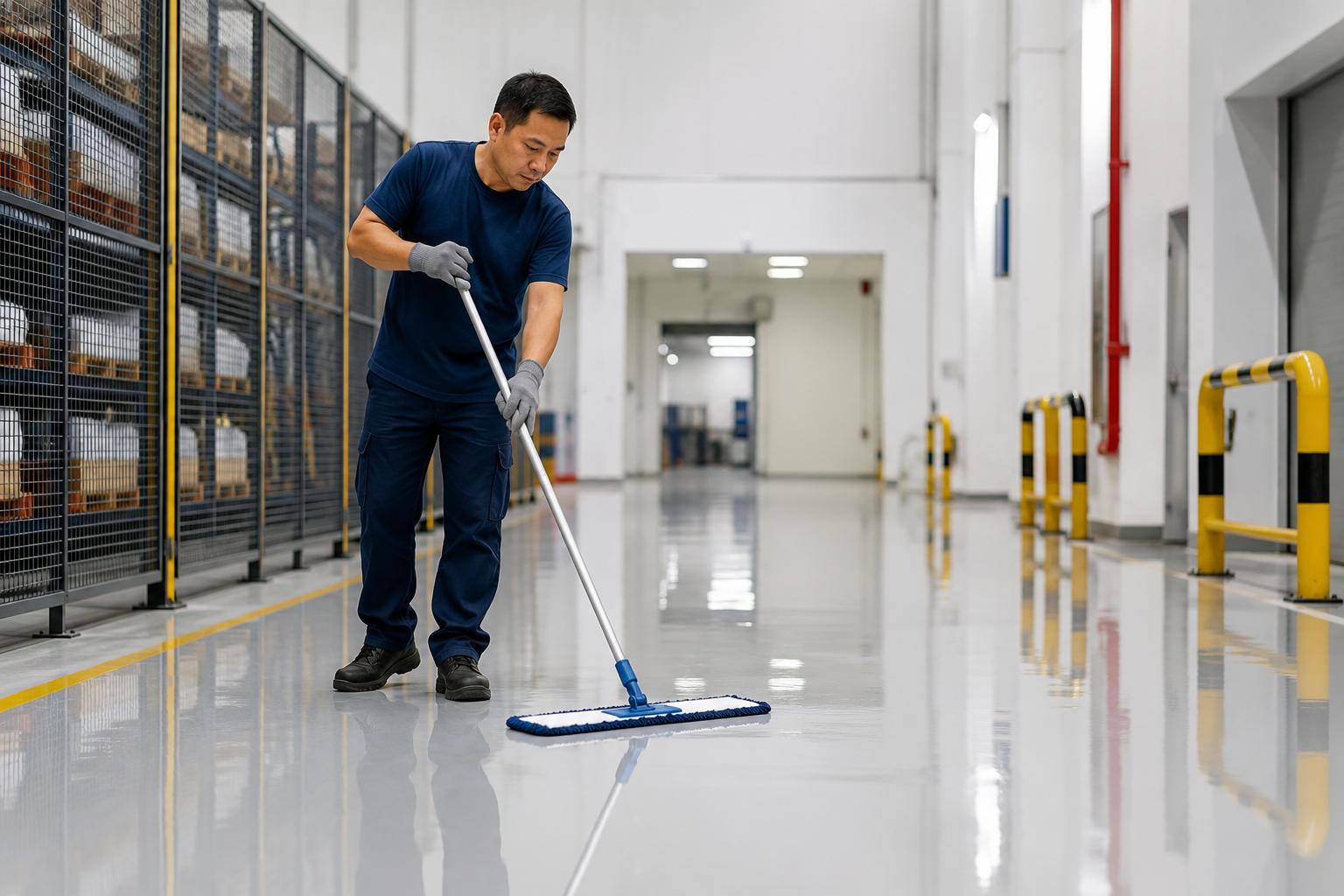
Epoxy flooring often performs at its best when routine maintenance is consistently incorporated into facility operations. However, not all epoxy floors require the same level of upkeep. Depending on the environment and usage, some systems may require daily cleaning, while others need less frequent maintenance.
Dust and Sweep
Epoxy flooring, especially in high-traffic areas such as warehouses or loading zones, requires daily dusting and sweeping, as dust, sand, and industrial debris can accumulate. To remove these particles, you can use a soft-bristle broom or an industrial-grade dust mop.
Wet Mopping
Light spills, residues, and tracked-in dirt on the epoxy floor can affect traction and hygiene standards, especially in food and healthcare areas. To maintain cleanliness and adhere to hygienic protocols, you can use a flat microfiber mop and clean water or manufacturer-recommended neutral cleaning solutions.
Avoid Soapy Residue
Cleaning agents are necessary in some cases, but excessive or improper use of soap-based solutions can leave behind residue on epoxy surfaces, reducing visual consistency. To prevent this, you can use minimal-cleaning solutions (e.g., pH-neutral floor cleaners) and ensure thorough rinsing or wiping after mopping.
Garage and Vehicle Care
Epoxy flooring in garages, parking facilities, and vehicle service areas is routinely exposed to tire traffic, heat, oil, and other automotive contaminants. While epoxy systems are designed to withstand demanding conditions, vehicle-related factors can still contribute to surface staining, discoloration, or premature wear if left unaddressed.
Clean Tires
Tires often carry dirt, sand, gravel, and other abrasive particles from roads and outdoor environments. When repeatedly tracked across an epoxy surface, these can gradually wear down the floor’s finish and accelerate surface deterioration. Before parking, inspect the tire treads for lodged stones and rinse off any accumulated dirt or road salt with a pressure washer or hose.
Handle Hot Tires
Vehicle tires naturally generate heat during prolonged driving or when exposed to high outdoor temperatures. Prolonged contact between hot tires and epoxy flooring may leave marks or damage softened areas of the coating. To help prevent this, allow the vehicle to cool before parking for extended periods, or use parking mats under the tires to reduce direct contact between the tires and the floor.
Manage Leaks
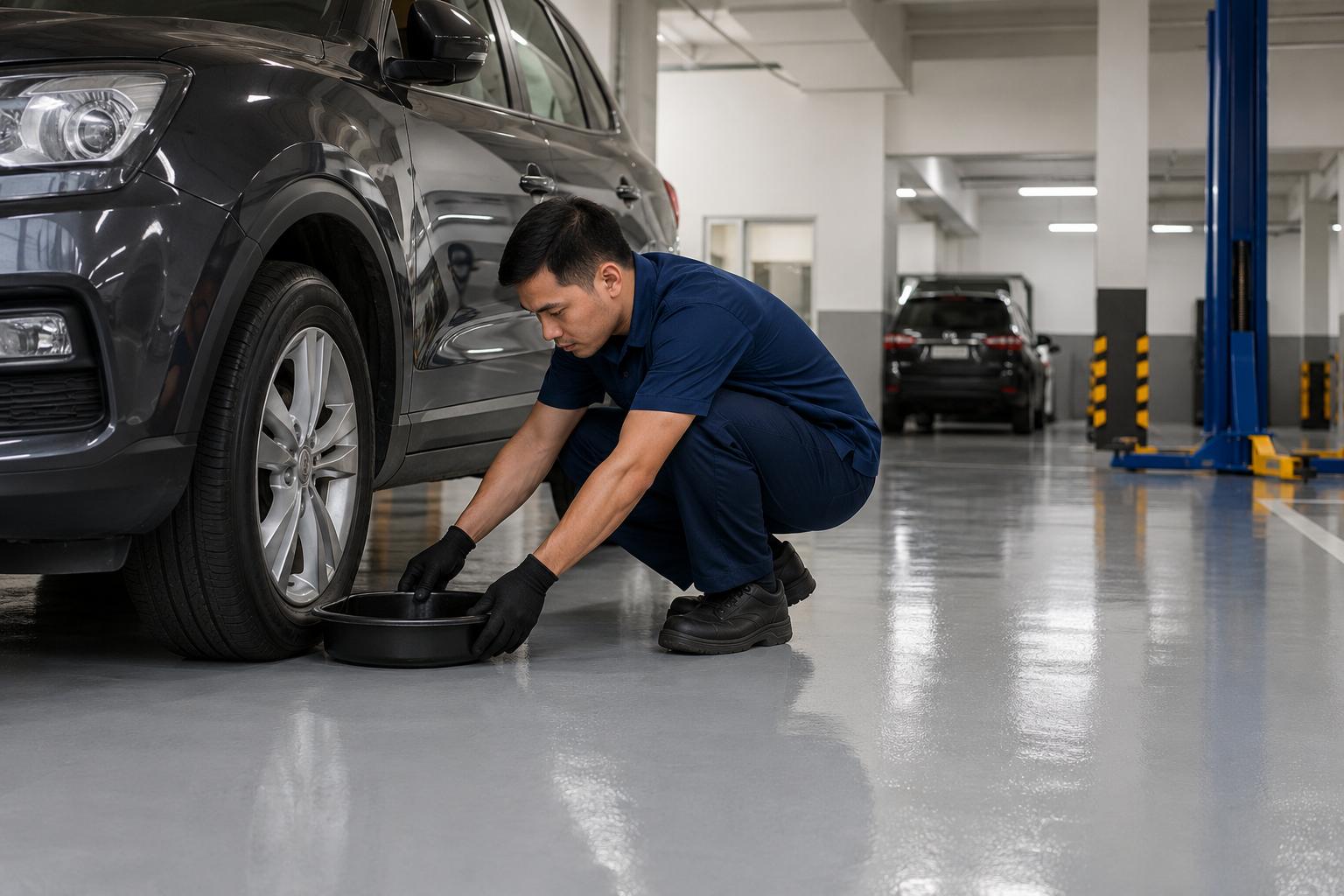
Oil, fuel, coolant, brake fluid, and other automotive liquids can stain epoxy flooring if spills are not addressed promptly. As soon as a leak is detected, place a drip pan or absorbent mat beneath the vehicle to catch fluids before they reach the floor.
Products and Tools to Avoid
Regular cleaning is important in maintaining the epoxy flooring, but using the wrong products can do more harm than good.
Harsh Chemicals
Epoxy flooring resists many substances, but prolonged exposure to strong acids, solvents, and other harsh chemicals may weaken the coating. To help preserve its appearance, use pH-neutral cleaners, mild dish soap, or diluted ammonia solutions (use with caution) as directed by the manufacturer.
Abrasives
Steel wool, wire brushes, and highly abrasive scrubbing pads may leave visible marks on epoxy flooring. Instead, opt for non-abrasive pads or soft-bristle brushes that can clean the surface without causing scratches.
Damage Prevention
Everyday activities such as moving furniture or transporting equipment can gradually cause physical damage to the floor’s surface. So, taking simple preventive measures is important to preserve the appearance and performance of epoxy flooring for years.
Protect from Furniture
Heavy furniture and equipment can place concentrated pressure on specific areas, increasing the risk of scratches, dents, or surface wear. To help distribute weight more evenly, install protective pads, rubber caps, or felt protectors on furniture legs and equipment bases.
Lifting, Not Dragging
Whenever possible, lift and carry items instead of dragging them across the floor. For heavier loads, use carts, dollies, or non-marking wheels to reduce friction and protect the surface.
Use Entry Mats
Placing entry mats at doorways, loading bays, and other access points helps trap debris before it reaches the epoxy floor, protecting the surface from abrasive contaminants.
Key Takeaway
These simple yet essential maintenance practices keep epoxy floors in top condition for years to come.
At Flooring Solutions PH, we offer high-performance epoxy flooring systems engineered to match the exact operational needs of your facility. Even with minimal upkeep, our durable floors are built to withstand heavy traffic and harsh cleaning products without losing their finish.
Ready to upgrade your space? Get in touch with us today to learn more about our top-performing epoxy flooring solutions.